Our Story
A note from the founder.
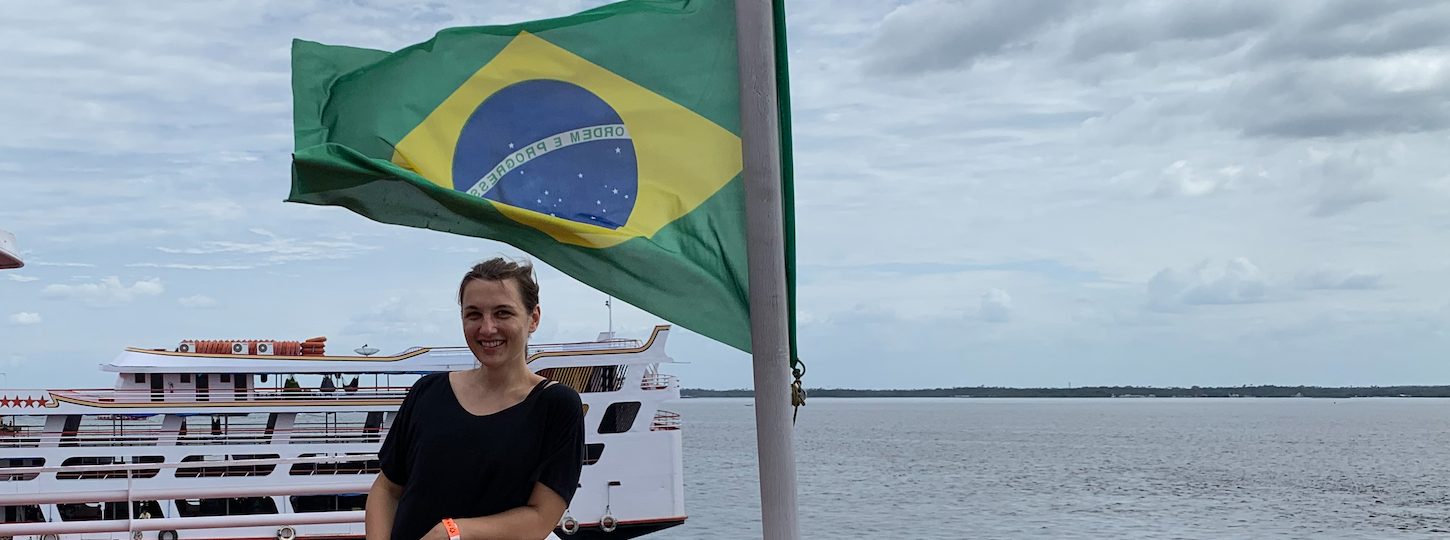
I was standing in the port of Manaus, in the heart of the Brazilian Amazon, on the deck of a large riverboat already straining at its ropes — the boat that would be my home for the next thirty days, up the river toward the far frontier. In front of me, at last, was a river I had dreamed all my life of seeing. I still remember the exact moment my throat closed and the tears came before I understood them. I had not even left the dock, and something in me had already given way.
I looked out at water so wide I could barely find the far bank, and when I lowered my eyes there were pink dolphins breaking the surface and caimans drifting near the hull. The Amazon is not a forest. It is a single living thing, the largest on Earth — more than half of all the rainforest left in the world, one in ten of every species we have ever named — and every tree and river and animal and cloud of rain in it is bound to every other so finely that it has helped hold the climate of the whole planet steady for longer than we have existed. Standing there, I felt myself become a very small part of something far older and wiser than me. I had not crossed an ocean to admire it. I had come to answer one question — how do you keep it alive? — and I had no idea of the answer. The answer, when it came, would arrive by candlelight, in a village I had never heard of.
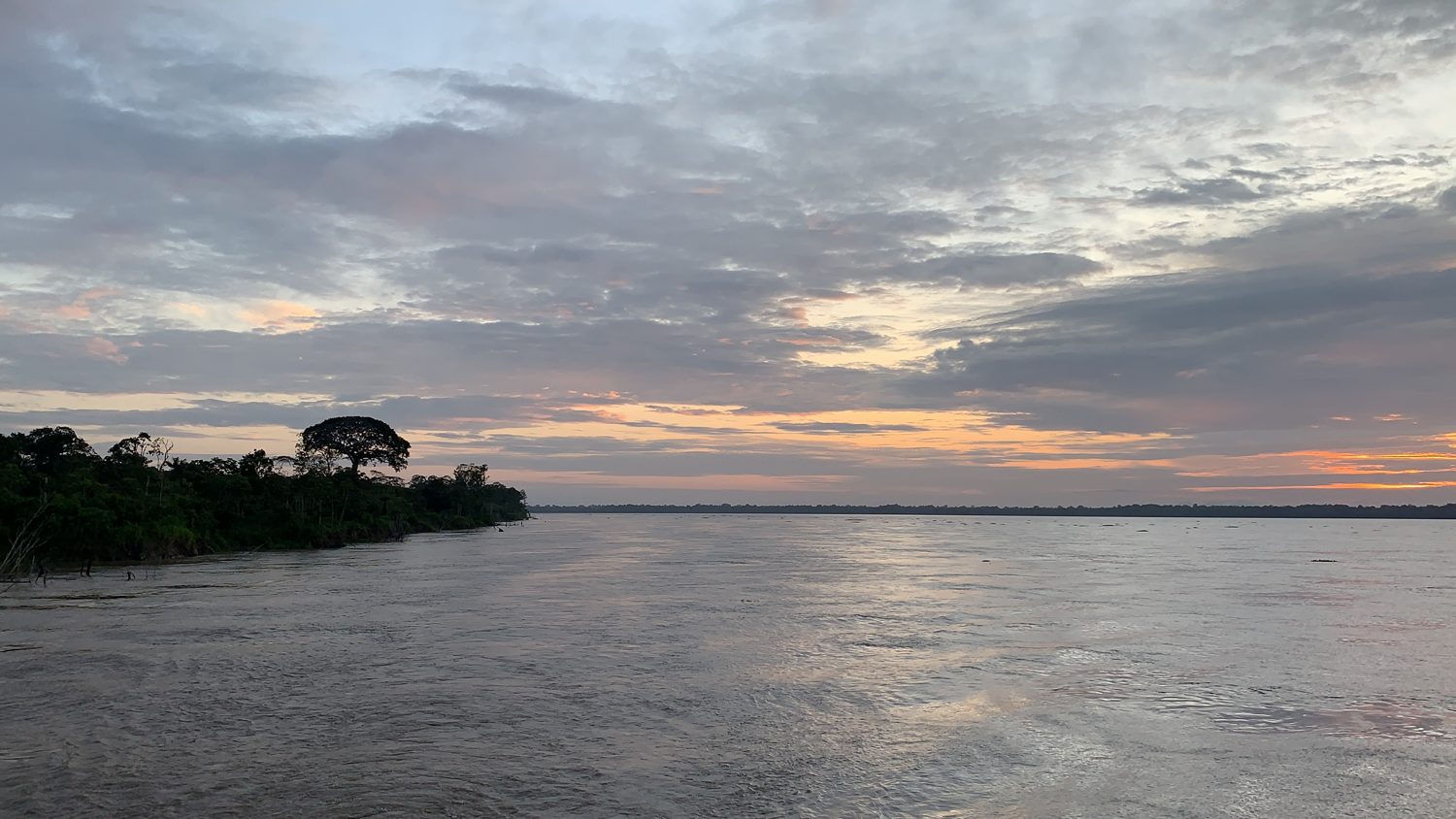
I had not come as a tourist. I had spent fifteen years circling this question without naming it. In Ukraine I built a company and made the Forbes list before I was thirty; then I went into government, as deputy governor of the region that holds our Carpathian forests, and later as an adviser to the President on how the country governs its woods. In between I ran the campaigns, led the protests, and defended those forests every way I knew. And all of it taught me one thing I have never unlearned: the real answer is never found in high offices, or in the careful talk of important people. It is found at the source. So I went to the source — to the ground, to the communities who have lived in this forest for thousands of years, and to the living jungle itself.
For weeks we pushed up the river, from Manaus toward the three-border country where Peru, Colombia and Brazil meet, from one community to the next, sleeping in the jungle in between — our hammocks strung between the trees under open sky, sometimes with no other human being for four hundred kilometres in any direction. It was not gentle. The mosquitoes were merciless, there were spiders I had no names for, and we washed by lowering ourselves into a river we knew was full of caimans. The people we reached were nothing like the painted, feathered tribes of the postcard: modern people in jeans and t-shirts, living entirely outside the modern world.
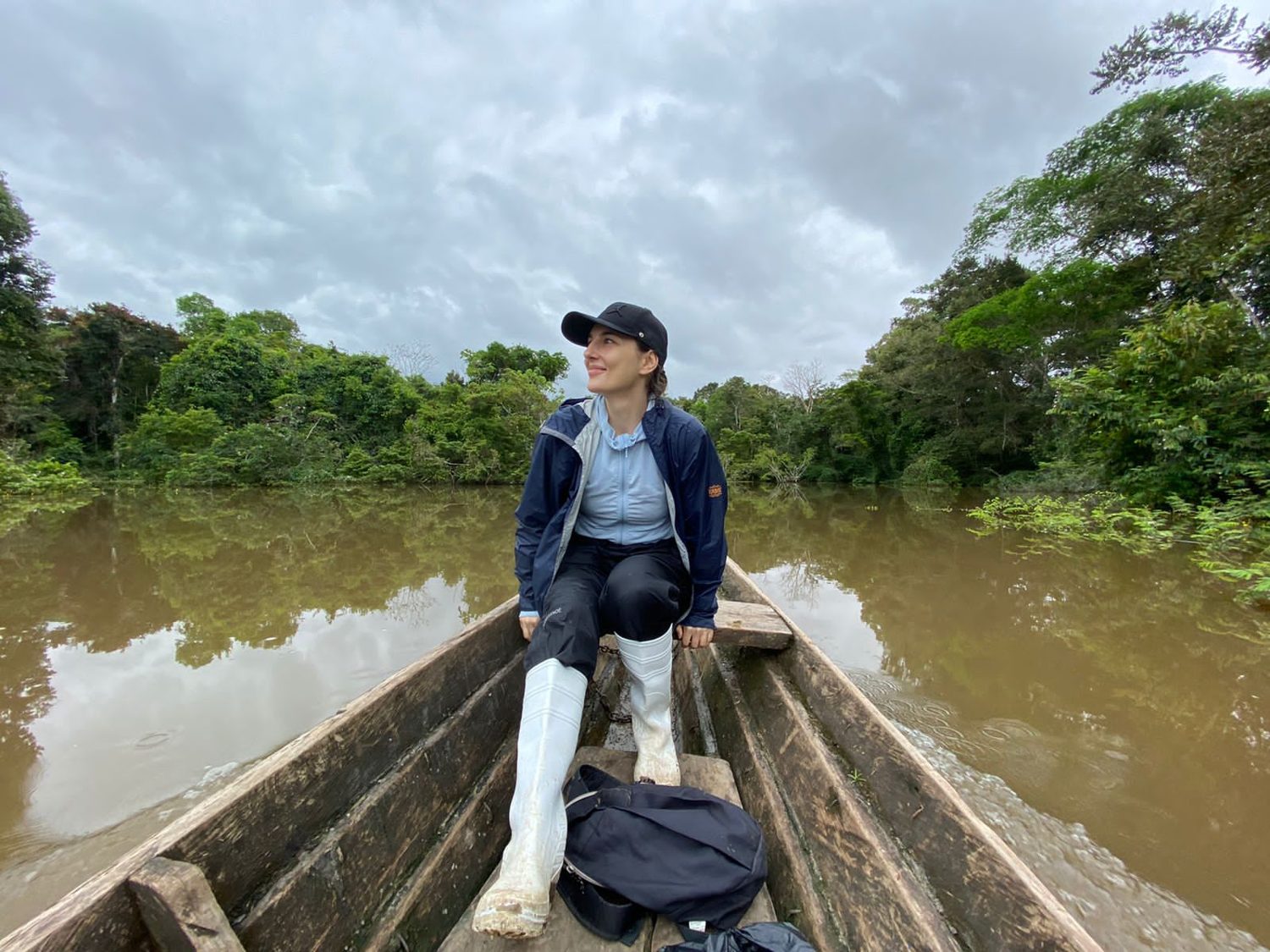
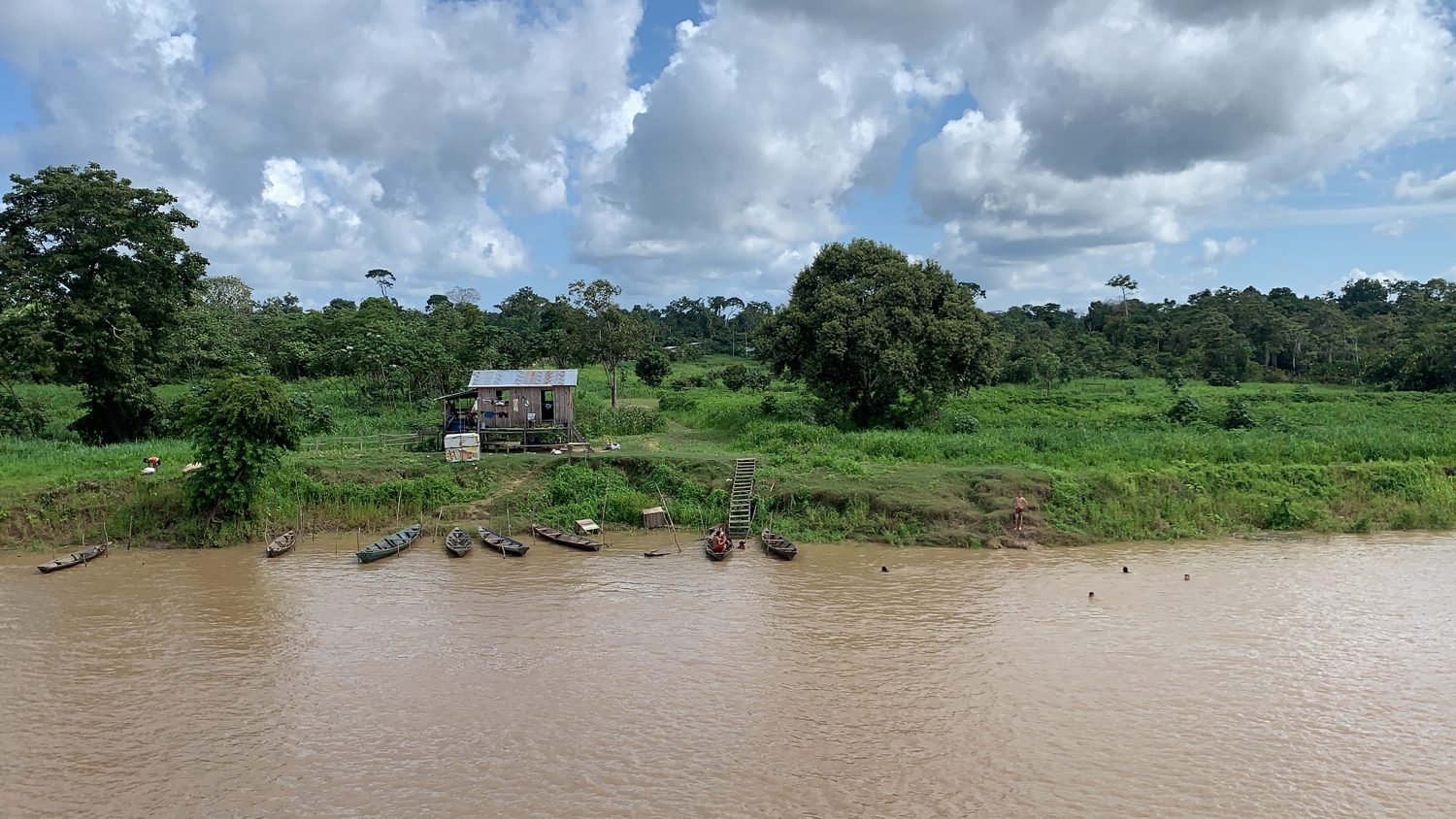
You change, living inside the jungle. At first you are frightened of everything, of a dark that is never silent. Then you learn the jungle has its own rules, and that it rarely turns on you if you keep them: do not go where you should not, learn to listen, learn to read it. You begin to take every step in full awareness, hearing and seeing and feeling, all at once, exactly where you are about to set your foot; and slowly an attention grows in you that the city had long since worn away. You learn to slow down, which turns out to be the same thing as that attention. You learn to live inside the cycles of the place instead of against them. Keep the rules of the living system and the fear drains out, and what is left is an order far older than any law we have ever written down.
I had arrived knowing the other numbers too, the ones that do not let you sleep: that cattle ranching drives some eighty per cent of the clearing, that a family with no other income clears a fresh patch of forest every year just to eat, opening it by slash and burn — they call these plots chacras, in their own tongue — that the forest falls by thousands of square kilometres, year after year. I thought I understood the problem. I did not. Not yet.
It was two weeks up the river, among the Kanamari people, in the district of Maraã, that I finally did.
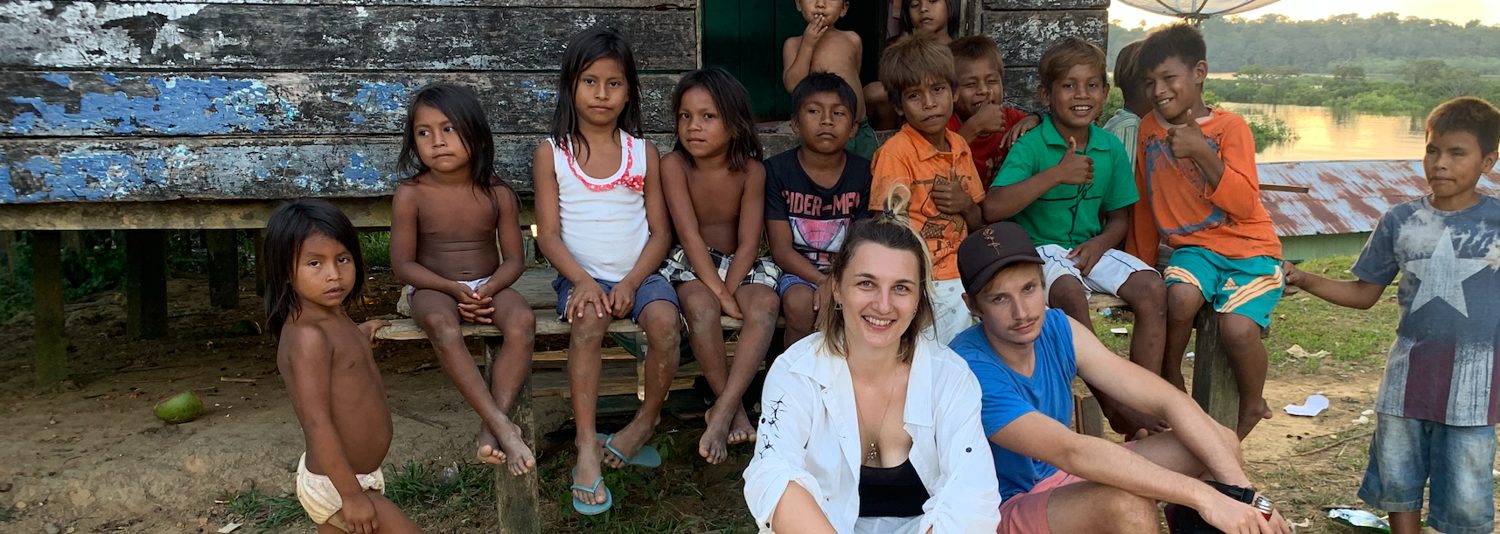
They are a small community, three hundred people, eighty families. We had stayed long enough that they had begun to trust us, and one night I sat on the floor of the home of their APU, the head of the community, with the friends I had come with and a single candle between us. He rose, went to a hidden place, and came back with a folded paper, and I could see at once that he held it as something sacred — secret, precious, almost dangerous to show. I understood why only later: in the Amazon, land is the deepest conflict there is. It was a notarised title. These three hundred people legally owned a quarter of a million hectares of rainforest, and he carried the proof of it like a relic, showing it only now that he believed we would not betray him.
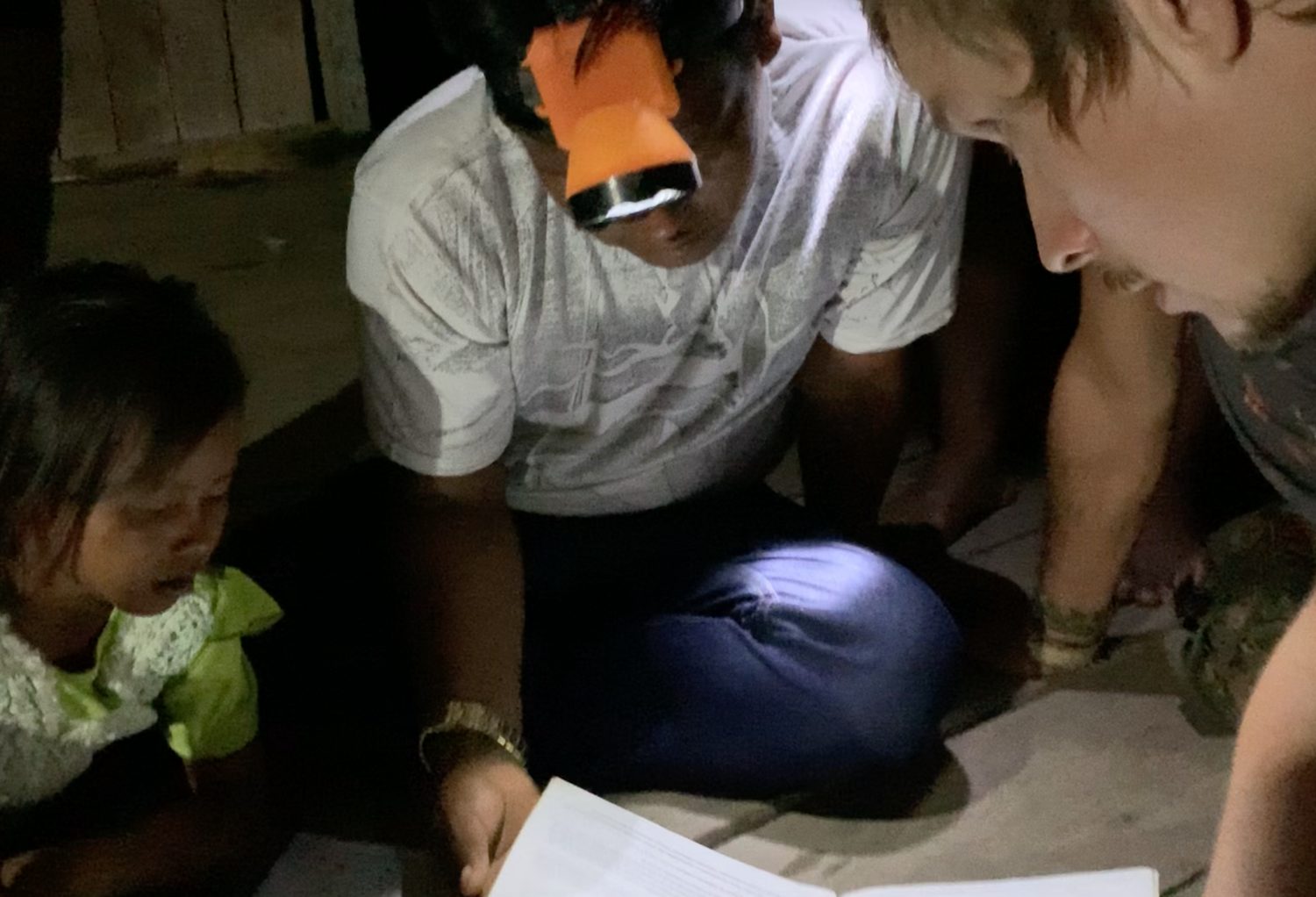
Then he opened the village accounts, kept by hand in a school notebook, and the whole truth of it landed at once. Each family puts in two or three dollars; together the community lives on no more than a hundred dollars a month. They are cut off from the state entirely — no budget, no transfer, nothing — and that hundred dollars is barely enough for the APU to make one or two trips to town a month, so that three hundred people have any thread at all to the world outside. To guard a quarter of a million hectares of rainforest, they had two rifles, both of them illegal, and a standing war with men who arrive with fire.
And still they protect it, completely, for nothing. They know exactly how much fish may be taken from the river so the balance holds, and they will not take one more; how many animals may be hunted, and even when it means going hungry, they will not kill more than a forest in balance can replace. This is not something they read in a book. It is knowledge they are born into, handed down by their ancestors, and they call themselves the guardians of the forest. I sat in that candlelight and felt something I had not felt since I left politics. Not pity. Fury. The best guardians this forest has, and the world is built so that keeping it alive holds them in poverty, while burning it down would have made them rich. I have not been able to look away since.
Around then I heard the president of Brazil on the radio, at war with the activists fighting to save the Amazon, and he said, more or less: if you really want to save the Amazon, then pay for it. An activist would have bristled. I went completely still.
Because something in me turned, all at once, like lightning, and I saw that he was right. We have never paid for the living forest. We do not even know how. On our balance sheets we can only see a forest once it is dead: a felled tree becomes a plank, then furniture, then a number, while the same tree left standing — making oxygen, holding the rivers, running everything around it — appears nowhere at all. It is worth nothing to us until the moment we cut it down. The Amazon is not being destroyed by villains. It is being destroyed by accounting.
I already knew how a thing like that is undone. In government I had spent long nights in a Kyiv apartment with Mikheil Saakashvili, the former president of Georgia, arguing about how to reform our own country, and the one thing I learned from him that no book has taught me is this: you do not change a system by fighting it; you change what it rewards, until it changes itself. So the answer in the Amazon was not to fight harder. It was to turn the arithmetic over — to make the living forest worth more than the dead one. But to pay the world for something, the world first has to be able to measure it. And no one could.
That was the missing piece, and it took me years after the night of the candle to build. The world does not pay for the living forest because no one can prove what it is worth, and you cannot price, protect or finance what you cannot measure. So I set out to measure it: from inside the forest, beneath the canopy where the satellites cannot see, and to turn what we find into proof solid enough for a market to trust. I needed a name. The forest had already chosen one.
The ceiba is the great tree of the Amazon, the one that stands high above the canopy. The people here hold it sacred and leave it standing even when they clear everything around it, because in their telling the ceiba joins the three worlds — the one below, the one we live in, and the one above. I took the tree the forest already holds as priceless and added the one thing that lets the rest of the world finally see its price. We called it CeibaQ.
And only now are we standing where it can truly be done. The tools have finally arrived: drones that read the forest from above, sensors that read it from within, and a machine intelligence that can watch all of it at once, where such watching was once unthinkably slow and costly — and, beside them, a way to make every link in the chain of proof unforgeable and open to anyone who cares to check. The tools are meeting their moment, because the world is, at last, beginning to pay for a forest kept standing and not only for a forest cut down. After thirty years, the science and the money are arriving at the same place at the same time.
When I began, none of this existed, and I believed anyway. The cost of believing was my body. I had dengue three times, and after one of them I spent the better part of a year too weak to rise from my bed, ill with things no one could name. The jungle takes apart the person a city makes of you. After a month in that wet, banknotes turn to pulp in your hands and clothes grow mould on the hanger; you drink the rain you have filtered, and in a long drought you count the days until the water runs out. I had spent my whole life in cities. Out there I belonged, entirely and without appeal, to the weather and the water — and, to my surprise, I was glad of it.
And the people were harder to learn than the forest. I came without a word of Spanish and tried, at first, to speak to them the way a European speaks — offering promises, talking about the future — until, in the second year, I understood why it never reached them. In their language there is no future tense. In many indigenous languages there is no word for “I,” only “we.” I could not arrive as a generous stranger with a plan. I had to become one of them: to carry their troubles, to live at their rhythm, to learn to see the world the way they see it. That was the real apprenticeship, and it is why any of this is possible at all.
Out of those six years we built what the idea needs: a research base in the rainforest that cost two and a half million dollars to raise, the relationships with Peru’s government and its scientists, and a team gathered one person at a time — Ukrainians who have measured Antarctica and the great rivers of Europe, Peruvians who have spent their whole lives in this forest — with the communities who own the land kept at the centre of the company, never at its edge.
This is the point the whole story has been moving toward, and it is the part still unfinished. You can be the ones who finish it with us. Together we can change, for good, the way the world sees nature.
And if you are as recklessly romantic as I am — in the best sense of the word — then let yourself imagine one thing more. Gather enough of this from a living forest, and one day we will not only measure the Amazon. We will give it a voice: something we can put a question to, something that can answer us back. We will stop merely looking at nature, and begin to listen to it.
These are distant dreams. But they may be far closer than they seem.